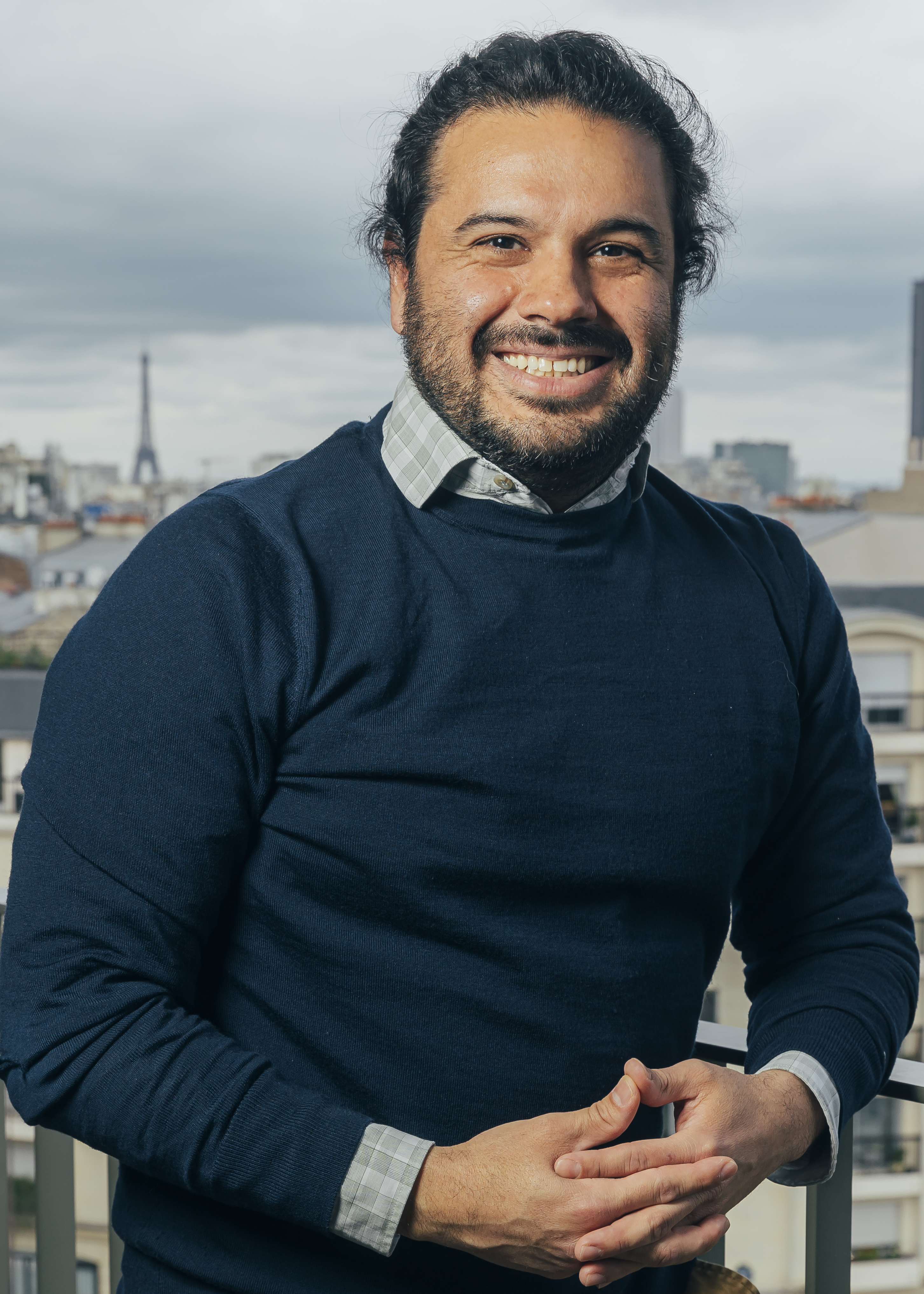
Welcome!
I am a Marie Skłodowska-Curie COFUND–C2W Postdoctoral Researcher at the University of Namur. I earned my PhD in Economics from the Paris School of Economics in 2024, following the APE master’s programme, and spent 2021–2022 as an exchange researcher at the London School of Economics and the CEP.
My research studies how inequality, politics, trade, migration, and climate change shape one another. I am currently examining how globalisation and inequality affect electoral outcomes, with new projects on the political effects of extreme weather events and climate policies.
Before moving to France, I worked in financial markets and later in the Research Department of the Central Bank of Costa Rica. I hold bachelor’s degrees in Economics and Sociology from the University of Costa Rica, and an IB Diploma from Li Po Chun UWC of Hong Kong.
I have consulted for the World Bank and the United Nations ECLAC, I serve as Coordinator for Central America and the Caribbean at the World Inequality Lab, and I am affiliated with the Programa Estado de la Nación in Costa Rica.
Research interests: economic inequality, political economy, trade, migration, applied econometrics.
Download CV (PDF)News
- 2026 Visiting researcher at the Haas School of Business, University of California, Berkeley , invited by Professor Matilde Bombardini .
- 2026 Presented at the ASSA–AEA Annual Meeting.
- 2026 New working paper added on inequality and long-run development.
Research
My work combines administrative, survey, and spatial data to study how inequality, globalisation, and climate change shape political behaviour and long-run development.
Working Papers
This paper constructs Distributional National Accounts (DINA) for Costa Rica, providing consistent income distribution series that integrate household surveys, macroeconomic accounts, and administrative records. The first objective is to correct official inequality estimates, which traditionally rely solely on household surveys.
Leveraging the high quality of available data, this study combines two complementary administrative datasets: (1) social security microdata to adjust the incomes of wage earners and pensioners, and (2) tax microdata to refine estimates for self-employed workers and capital income. The resulting series show higher inequality than reflected in official figures for 2000–2022, with a marked deterioration in 2020, likely linked to the COVID-19 pandemic.
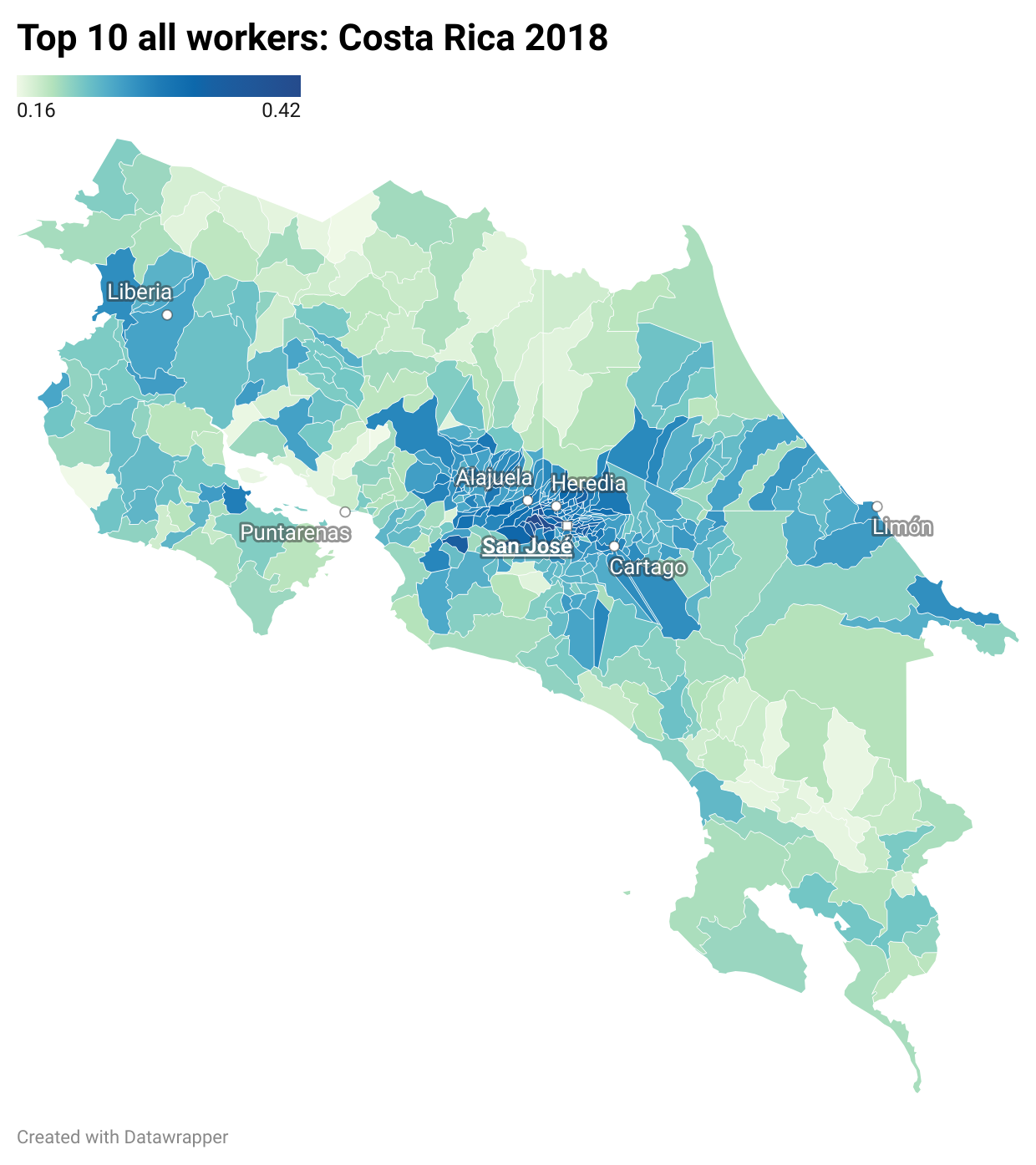
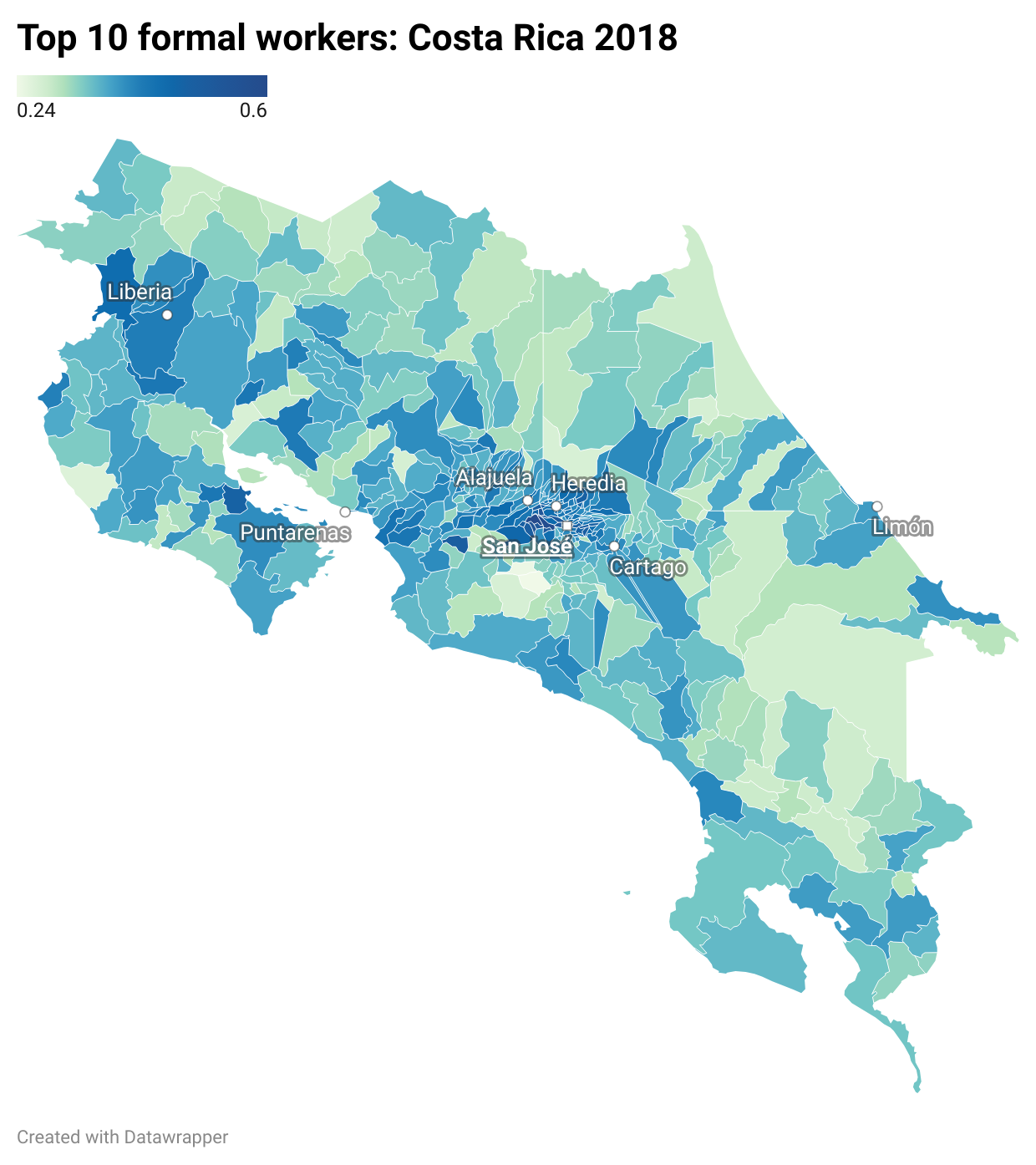
The second objective is to generate revised inequality measures at the local level (county and district). By integrating household surveys, census data, social security records, and electoral data, I produce subnational inequality estimates that enable the analysis of spatial disparities and the impact of structural shocks, such as the 2009 financial crisis and the COVID-19 pandemic. The findings uncover substantial local-level variation that is otherwise obscured in national averages.
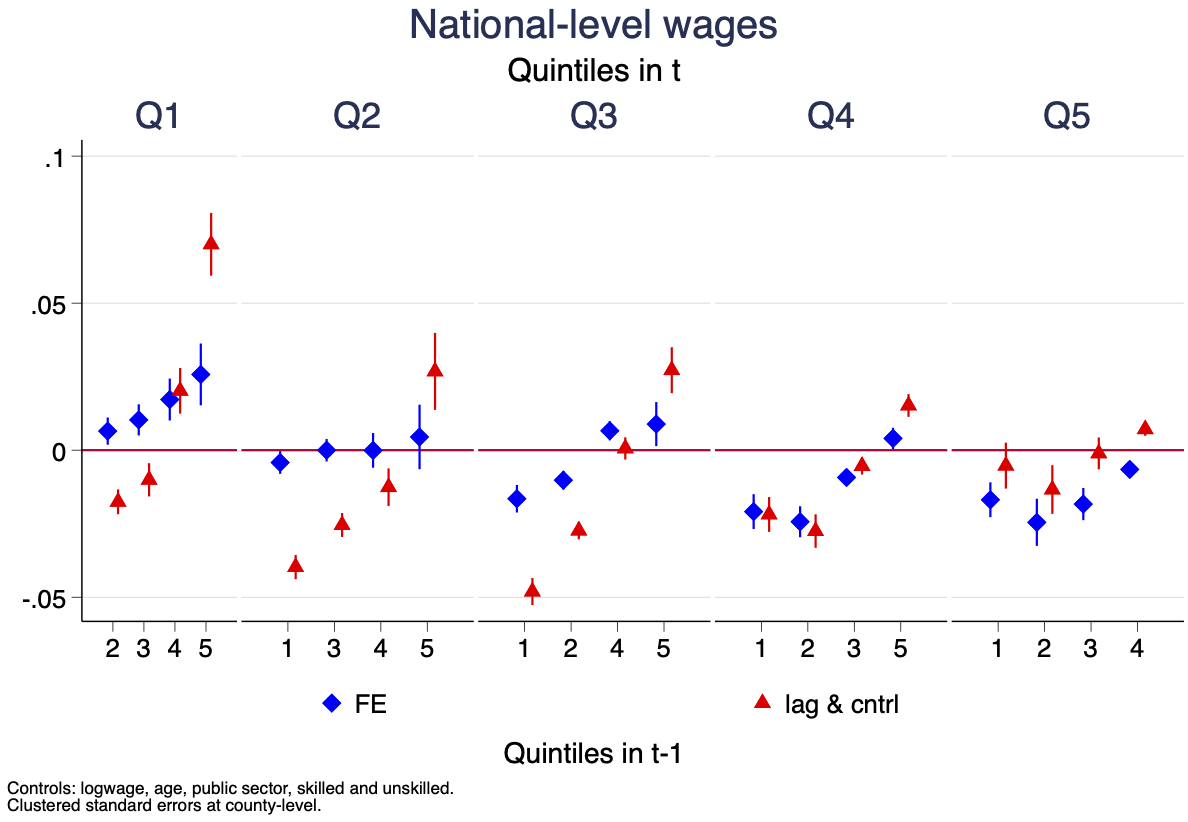
This study uses Costa Rica to examine how income shocks and inequality affect declining voter turnout and the rise of multi-party systems. Since 1998, Costa Rica has experienced a significant decrease in electoral participation, providing a unique perspective to investigate socio-economic factors influencing voter behaviour.
By combining electoral registries with social security employer–employee records at the individual level, this research delivers novel evidence from a developing democracy with a robust electoral tradition. The findings indicate a positive relationship between income and voter turnout, significantly moderated by inequality. High inequality increases electoral mobilisation among voters at income extremes, while lower inequality enhances participation among middle-income groups.
Individuals experiencing downward income mobility exhibit higher electoral engagement, suggesting economic hardship motivates voter turnout in the short term. These conclusions are validated through three identification strategies: random assignment of voters to polling stations within polling centres, income loss from unexpected mass layoffs, and income variations linked to changes in international agricultural prices.
Income shocks have also reshaped electoral dynamics, especially affecting the historical PLN party, which shifted its support from middle-income voters to the poorest and wealthiest segments.
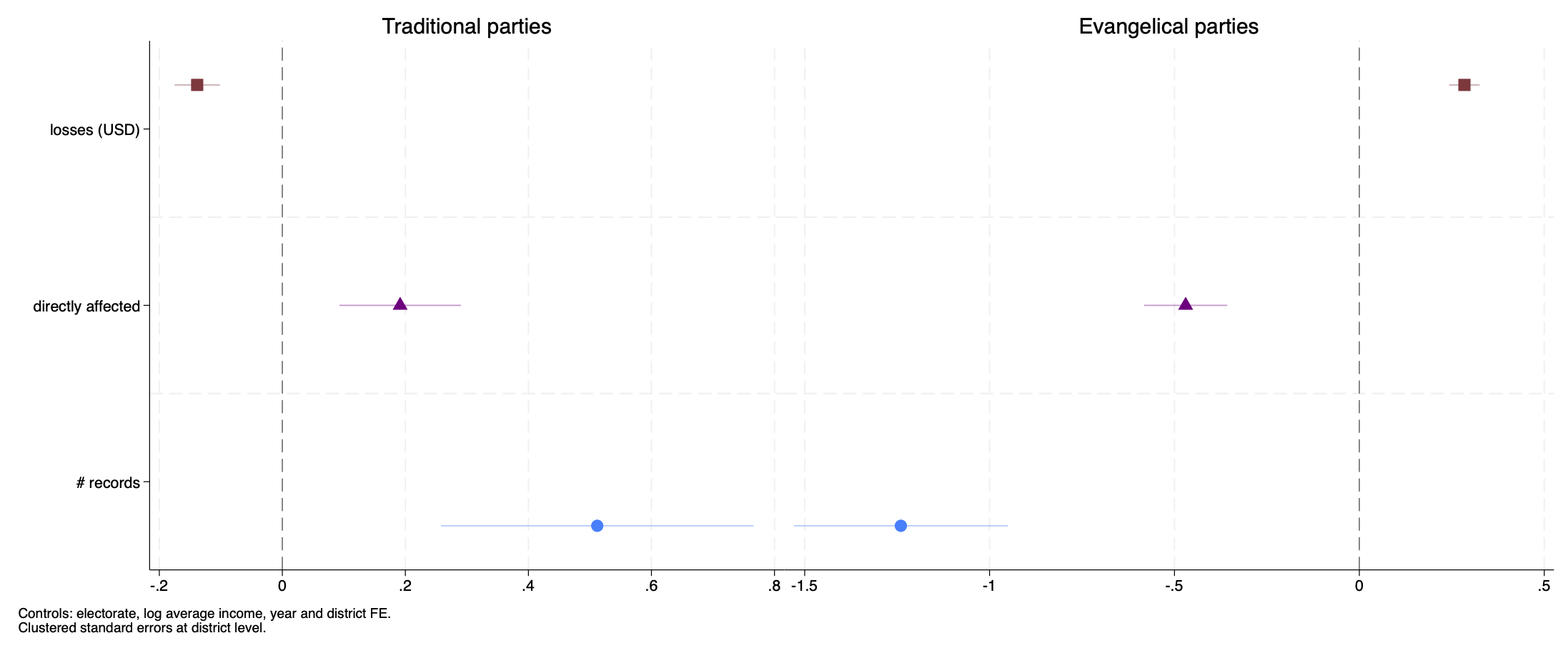
This paper examines the political implications of climate change by analysing how extreme weather events affect electoral outcomes in Costa Rica. Leveraging rich administrative data—including electoral results, individual-level turnout records, employer–employee information, disaster inventories, and geo-localised weather registries—the study integrates high-resolution environmental and electoral data to address a central question: How do extreme weather events affect voting behaviour?
The analysis compares regions exposed to climate shocks over time using a difference-in-differences framework with staggered treatment and event-study designs. Preliminary findings suggest that direct experiences with climate change shape voter attitudes and participation, with responses varying by socioeconomic status and political predispositions.
In progressive-voting areas, extreme weather increases support for environmental policies, while in conservative regions such events boost backing for evangelical populist alternatives. To explain this divergence, the study examines the timing and spatial distribution of evangelical churches, showing that extreme weather strengthens existing evangelical networks and mobilises electoral support for evangelical populist candidates.
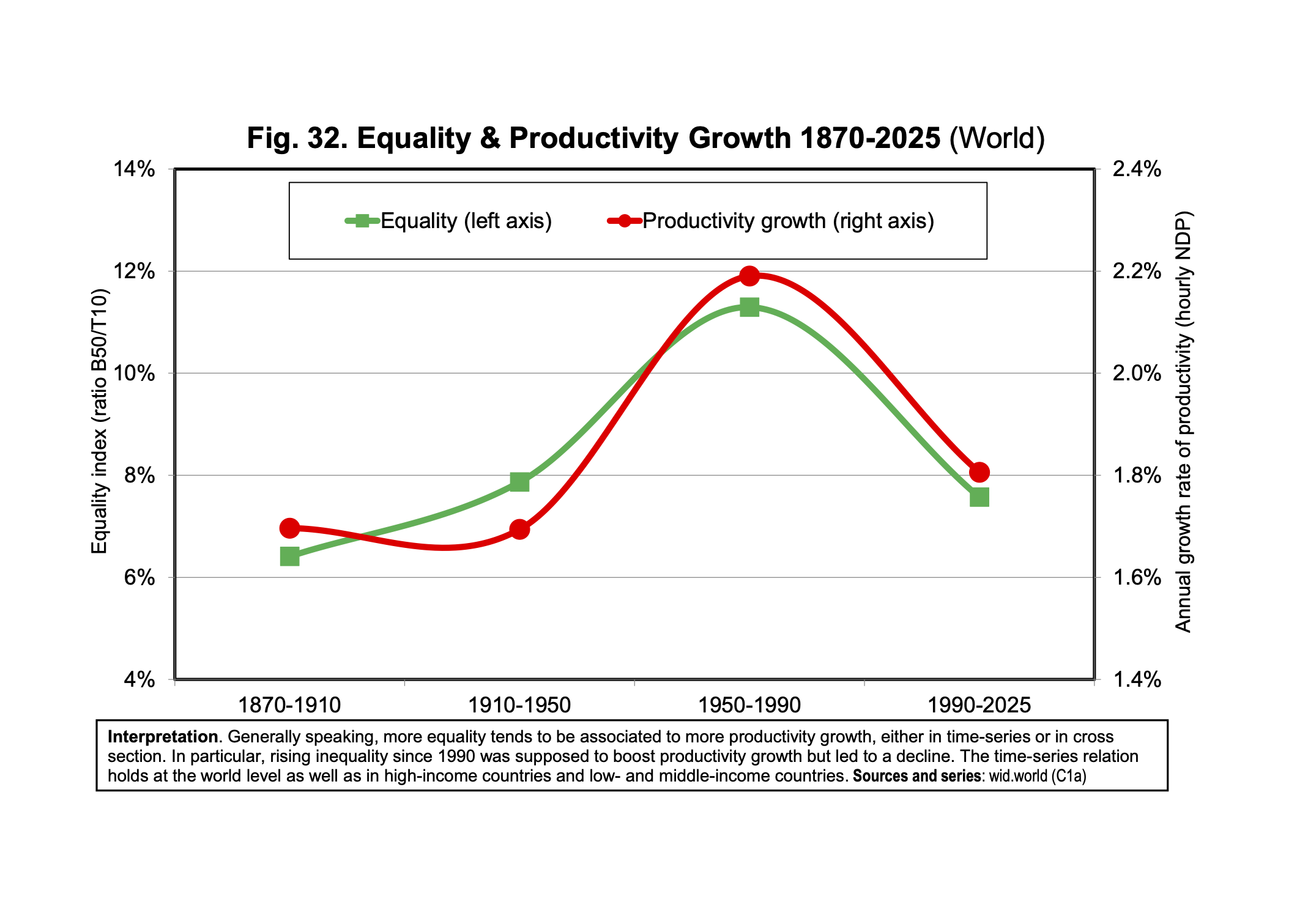
This paper uses extended series on income and wealth inequality from the World Inequality Database (WID) covering all world regions over the 1800–2025 period, together with new series on hourly productivity and human capital expenditure, to revisit the relationship between equality and development, with a much broader comparative and historical perspective than previous studies.
Over the long run, we find a strong positive association between equality and productivity. Our proposed interpretation is that the rise of inclusive “social-democratic” institutions (including extended access to human capital, public services, and democratic participation) led both to more equality and higher productivity, particularly in Western and Nordic Europe.
We discuss the implications for future sustainable development strategies.
Work in Progress
Book Chapters and Collaborations
Databases
A core component of my research is building and harmonising administrative, survey, and national-accounts data to produce distributional statistics. In particular, I construct original subnational inequality series for Costa Rica at the county and district levels using the Distributional National Accounts (DINA) methodology (see Distributional National Accounts Costa Rica: Inequality Measures from the National to the Local Level, 2000–2022.
These series are currently available upon request and will be publicly available soon.
Original inequality measures at the county and district level, designed for spatial analysis and the study of local heterogeneity in distributional dynamics.
Teaching
I have taught graduate and undergraduate courses in international trade, econometrics, and economics at the Paris School of Economics and Université Paris 1 Panthéon-Sorbonne, in both English and French.
International Trade (graduate, English), with Thierry Verdier & Matthieu Parenti, 2023–2025.
International Trade (graduate, English), with Thierry Verdier, 2022–2023.
International Trade (undergraduate, English), with Léa Marchal, 2022–2023.
Introduction to Econometrics (undergraduate, French), with Catherine Doz & Tobias Broer, 2019–2020 & 2022–2023.
International Trade (undergraduate, French), with Lionel Fontagné & María Bas, 2018–2020.
Introduction to Economics (undergraduate, French), with Nicolas Canry, Olena Havrylchyk & Angela Greulich, 2018–2019.
Curriculum Vitae
A concise overview of my current position, education, and selected experience is provided below. For full details, please download the PDF.
Download full CV (PDF)Academic Appointments
- Postdoctoral Researcher, Marie Skłodowska-Curie COFUND–C2W, University of Namur (2024–present).
- Coordinator of Studies for Central America and the Caribbean, World Inequality Lab, Paris School of Economics (2023–present).
- Teaching and Research Fellow (ATER), Centre d’Économie de la Sorbonne, Université Paris 1 Panthéon-Sorbonne (2022–2023).
Education
- PhD in Economics, Paris School of Economics & Université Paris 1 Panthéon-Sorbonne (2024).
- European Doctoral Program in Quantitative Economics (EDP), London School of Economics (2021–2022).
- Master in Economics (APE), Paris School of Economics & EHESS (2018).
Recent Grants (Selected)
- World Inequality Lab Mini-Grant (x2), 2025.
- FNRS Mobility & Congress Funding, 2024–2025.
- ADRES Grant Program, 2024.
- PGSE Research Grants (ANR), 2019–2022.
Languages & Skills
- Languages: Spanish (native), English & French (fluent); basic Arabic, German & Mandarin.
- Computer Skills: R, Stata, Python, QGIS, Matlab, SAS, EViews, SPSS, Visual Basic.